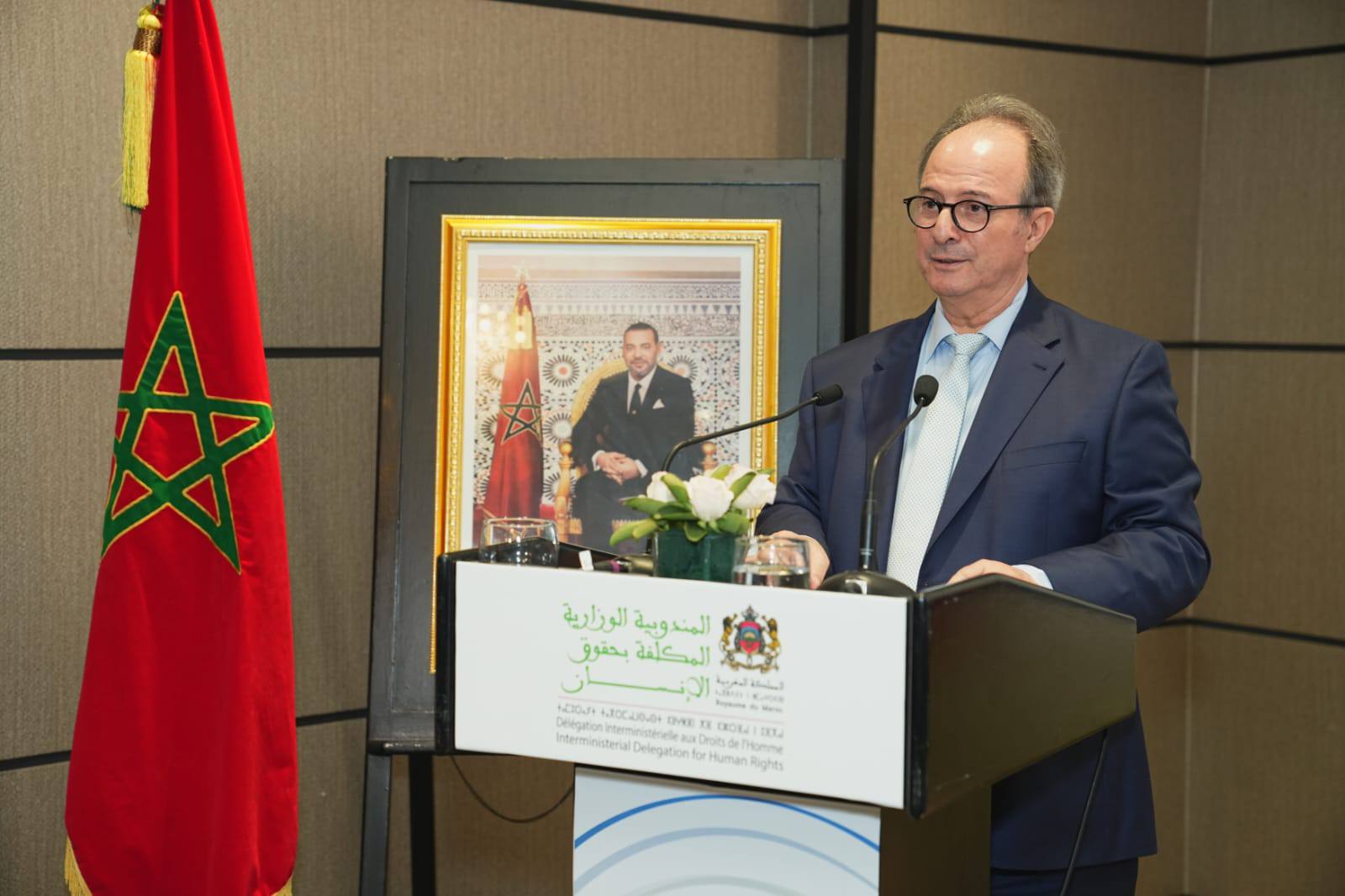
كلمة السيد المندوب الوزاري المكلف بحقوق الإنسان بمناسبة افتتاح الورشة التحسيسية: التغطية الإعلامية للتظاهرات الرياضية الكبرى واحترام حقوق الإنسان
حضرات السيدات والسادة، الشركاء الدوليون، الخبراء، وممثلي المؤسسات الوطنية والهيئات الرياضية، الصحفيات والصحفيون الأفاضل، ضيوفنا الكرام، يسعدني أن أرحّب بكم جميعاً، وأن أتوجّه إليكم بعبارات الشكر الجزيل على تلبية الدعوة للمشاركة في هذه الورشة التوعوية التي نعتبرها محطة مهمة لتعزيز حضور حقوق الإنسان داخل الفضاء الرياضي، وفي الممارسة الإعلامية على حدّ سواء. وتستمد هذه الورشة أهميتها من كونها تأتي في ظرفية رياضية مفصلية يستعد فيها المغرب لتنظيم تظاهرات رياضية كبرى، على رأسها استضافة كأس أمم إفريقيا 2025، وكأس العالم لكرة القدم 2030، إلى جانب إسبانيا والبرتغال، إضافة إلى تنظيم أحداث رياضية أخرى ذات طابع قاري أو دولي. لقد أصبح المجال الرياضي واحدًا من أكثر الفضاءات متابعة ورصدًا وتأثيرًا على الصعيد العالمي. وبالتالي، فإن الطريقة التي ننظم بها هذه الأحداث وتغطيتها إعلاميًا تشكل رسالة واضحة حول مرجعياتنا وقيمنا الانسانية والحضارية واختياراتنا الاجتماعية والحقوقية والتنموية. إن هذه الأحداث الرياضية الكبرى لا تمثل مجرد منافسات أو لحظات للفرجة؛ بل تُعدُّ منابر عالمية للاستعراض وتبادل وتلاقح القيم الانسانية، وفضاءات للإدماج، ونشر ثقافة حقوق الانسان وتطوير الحكامة. وبذلك فهي تشكل مناسبة لتعزيز العيش المشترك، وتكافؤ الفرص، والتماسك الاجتماعي. لكن وبالموازاة فهذه المحطات الرياضية قد تكون كذلك - وفي غياب اليقظة والضوابط - فضاءً لانتشار خطابات الكراهية، والعنف اللفظي أو الرمزي، وسائر أشكال التمييز والعنصرية. حضرات السيدات والسادة، تعد الرياضة من بين الحقوق الأساسية وأحد المداخل الرئيسية للتمتع بحقوق أخرى من قبيل الحق في الصحة والترفيه والتربية وغيرها إذ أنها أصبحت أحد الروافد لتعزيز حقوق الانسان الأخرى كما أكدت ذلك المرجعيات الدولية، من بينها الإعلان العالمي لحقوق الإنسان، والعهدان الدوليان الخاصان بالحقوق المدنية والسياسية والاقتصادية والاجتماعية والثقافية، والاتفاقية الدولية للقضاء على جميع أشكال التمييز العنصري، واتفاقية حقوق الطفل، واتفاقية مناهضة جميع أشكال التمييز ضد المرأة، واتفاقية حقوق الأشخاص ذوي الإعاقة وغيرها. ونستحضر في هذا الإطار قرار مجلس حقوق الإنسان، المعتمد بتاريخ 12 أكتوبر 2023، الذي شدّد على ضرورة خلق "فضاء رياضي خالٍ من العنصرية والتمييز العنصري وكراهية الأجانب وما يرتبط بها من تعصّب"، كما أعاد قراره الأخير بتاريخ اكتوبر 2025 التأكيد على هذا الالتزام، داعياً الدول إلى إعداد مدونات سلوك وتمويل حملات تحسيسية لمكافحة العنصرية في الرياضة. من هنا تتجلى مسؤوليتنا الجماعية في أن نترجم هذه الالتزامات إلى واقع ملموس، وأن نجعل من فضاءاتنا الرياضية فضاءات آمنة وممتعة وتربوية وتواصلية، تعكس طموحنا للنهوض بالمشروع الحقوقي والديمقراطي والتنموي الذي عرفته بلادنا بقيادة جلالة الملك محمد السادس نصره الله. ويؤكد المغرب اليوم اختياره لنهج يقوم على رياضة أخلاقية وتنموية ودامجة، قائمة على احترام الكرامة والمساواة، ومنسجمة مع المعايير الدولية، وخاصة متطلبات دفتر التحملات الخاص بكأس العالم الذي يضم بنودًا صريحة تتعلق بحقوق الإنسان وحماية الأطفال والمساواة بين الجنسين ومنع جميع أشكال التمييز. ويظهر المغرب في هذا الباب، ريادة إقليمية وقدرة خلاقة واستعدادا قويا لإنجاح تنظيم مختلف التظاهرات الرياضية، وفق المرجعيات والمعايير الدولية وفي أحسن الظروف التنظيمية، بما يساعد على الابداع والتنافس الرياضي وتقوية أواصر التواصل بين الدول والأمم والشعوب والمساهمة في تحقيق التعاون والسلام الدولي، وجعل الرياضة في خدمة حقوق الانسان ورافعة للتنمية. ونستحضر هنا بتقدير كبير الأدوار الطلائعية للصحفيين الرياضيين والإعلام الرياضي لمواكبة هذا التوجه الوطني الاستراتيجي والاسهام في المجهودات النوعية والاستثنائية التي يبذلها الفاعلون المعنيون بالشأن الرياضي وعلى رأسهم الهيئات الرياضية الوطنية. حضرات السيدات والسادة، إن الإعلام الرياضي يتحمّل اليوم مسؤولية متزايدة، فهو ليس مجرد ناقل للخبر، بل هو فاعل مؤثر في تشكيل الرأي العام، وفي الوقاية من خطاب الكراهية، وفي تعزيز صورة إيجابية عن الرياضة والقيم الإنسانية النبيلة التي تحملها. وفي هذا الصدد، يؤكد الميثاق الأولمبي، وتوصيات مجلس أوروبا، وتوصيات اليونسكو والمنظمة الدولية للشغل ومبادئ الأمم المتحدة التوجيهية بشأن الأعمال التجارية وحقوق الإنسان (UNGPs)، ومعايير الفيفا والكاف وباقي الهيئات الدولية المشرفة على الشأن الرياضي، على دور وسائل الإعلام باعتبارها شريكاً محورياً في ضمان احترام الحقوق الأساسية في التظاهرات الرياضية الكبرى. ويطرح اتساع نطاق التغطية الإعلامية التي لم تعد مقتصرة على الصحف والمجلات الورقية والقنوات التلفزية والإذاعات، وامتدت إلى الفضاءات الرقمية، تحديات جديدة أحيانا ترتبط بانتشار خطاب للعنف والتمييز والعصرية والصور النمطية، بسرعة كبيرة وبشكل غير قابل للمحو وبآثار سلبية خطيرة، خصوصاً ضد النساء والأطفال واليافعين والشباب، وهذا ما يشكل تحديا كبيرا علينا جميعا أن نعمل على مواجهته وتوفير شروط الاضطلاع بالرسالة النبيلة للإعلام ومختلف الوسائط بما يخدم الروح والمبادئ الموكولة للرياضة والإعلام. ونستحضر هنا تقاطع هذا الموضوع مع حملة 16 يومًا من النشاط لمناهضة العنف القائم على النوع الاجتماعي، والتي تركز هذه السنة على العنف الرقمي. وهو ما يجعلنا نؤكد على أهمية إيلاء العناية الكافية للنهوض بالرياضة النسائية، وحماية النساء مع العنف في الأوساط الرياضية بما في تسليط الضوء على العنف الرقمي الذي يستهدف النساء والتصدي له والوقاية منه بتظافر جهود كل الفاعلين المعنيين بمن فيهم الإعلام الرياضي. حضرات السيدات والسادة، إن المغرب، وهو يستعد لاحتضان أهم التظاهرات الكروية على الصعيدين القاري والدولي، يعي حجم المسؤولية الملقاة على عاتقه، ويلتزم بجعل هذه الأحداث نموذجاً إفريقياً ومتوسطياً ودوليا على مستوى: الوقاية من خطاب الكراهية والعنف والتمييز؛ تعزيز التنوع داخل وسائل الإعلام؛ دعم الإدماج الفعلي للنساء في الرياضة؛ حماية الأطفال واليافعين والشباب؛ احترام كرامة العمال والمشجعين والصحفيين والرياضيين. ويمثّل الاندماج المتزايد بين الإطار التنظيمي العالمي للرياضة (Lex Sportiva) ومبادئ حقوق الإنسان فرصة لتعزيز ثقافة تحترم الكرامة والمساواة داخل الملاعب وخارجها كمساهمة في تأصيل حقوق الإنسان في التربة المحلية والممارسة الاجتماعية. إننا في محطات التقاء بين أناس ينتمون إلى ثقافات وحضارات وقارات وأعراف وقيم متعددة، وعلينا أن نكون في مستوى تدبير هذا الاختلاف بما يقوي التعايش والاحترام المتبادل والقيم الإنسانية والسلم. حضرات السيدات والسادة؛ اسمحوا لي أن أتوقف عند الدور الأساسي للصحفيين الرياضيين في الوقاية من انتهاكات حقوق الانسان وتعزيز احترام مبادئها وقيمها، وفي نقل صورة مسؤولة ومشرفة عن ألعاب رياضية تنافسية، بشكل مهني يحترم أخلاقيات الصحافة، وينبذ التمييز، ويضع الأحداث الرياضية في سياقها الصحيح. فبفضل التزامكم السيدات والسادة الصحفيين، يمكن للإعلام أن يعزز المشاركة الشاملة، وأن يدافع عن الحضور المتزايد لرياضة تحترم قيم حقوق الانسان، وأن يواجه الصور النمطية والخطابات العدائية والتحريضية والعنيفة والتمييزية. وكما تعلمون من خلال تعزيز التغطية الإعلامية الأخلاقية والمهنية، نحن لا نهيّئ فقط لتنظيم أحداث كبرى، بل نبني نموذجًا وطنيًا للحكامة الرياضية والتواصل المسؤول المبني على حقوق الإنسان، ونساهم في تنشئة أجيال على ثقافة حقوق الإنسان. وفي الختام، أدعو جميع الفاعلين، من مؤسسات وطنية، وجمعيات رياضية، ووسائل إعلام، ومجتمع مدني وجمعيات المشجعين، وشركاء دوليين، إلى مواصلة التعبئة الجماعية لتحويل هذه المحطات الرياضية البارزة إلى رافعة حقيقية لحقوق الإنسان والتنمية، ولجعل التظاهرات المقبلة التي تحتضنها المملكة المغربية ممارسة فضلى تقترن فيها المتعة الرياضية باحترام حقوق الانسان، والفرجة بنشر القيم الإنسانية النبيلة. ونتطلع في هذا الشأن إلى أن تكون الصحفيات والصحفيون شركاء استراتيجيون في تحقيق هذا الهدف، من خلال تغطية إعلامية تعزّز قيم المساواة، والإنصاف، والاحترام المتبادل، والتسامح، والتعددية والاختلاف، والحوار والتعاون. أشكركم على تفاعلكم الإيجابي مع هذه المحطة، وأتمنى لكم لقاء حافلًا بالنقاشات الهادفة والحوارات البناءة والعمل المشترك لصالح قضايا الإعلام والرياضة وحقوق الانسان. كما نعدكم بمواصلة مرافقة هذا الورش الهام على مستويات متعددة منها الأمني والقانوني والتربوي وغيره بتعاون مع مختلف الهيآت والمؤسسات المعنية وضمنها الإعلام. ولكم من المندوبية الوزارية المكلفة بحقوق الإنسان صادق التحية والشكر والتقدير أفرادا ومؤسسات وهيآت دولية، والسلام عليكم ورحمة الله.