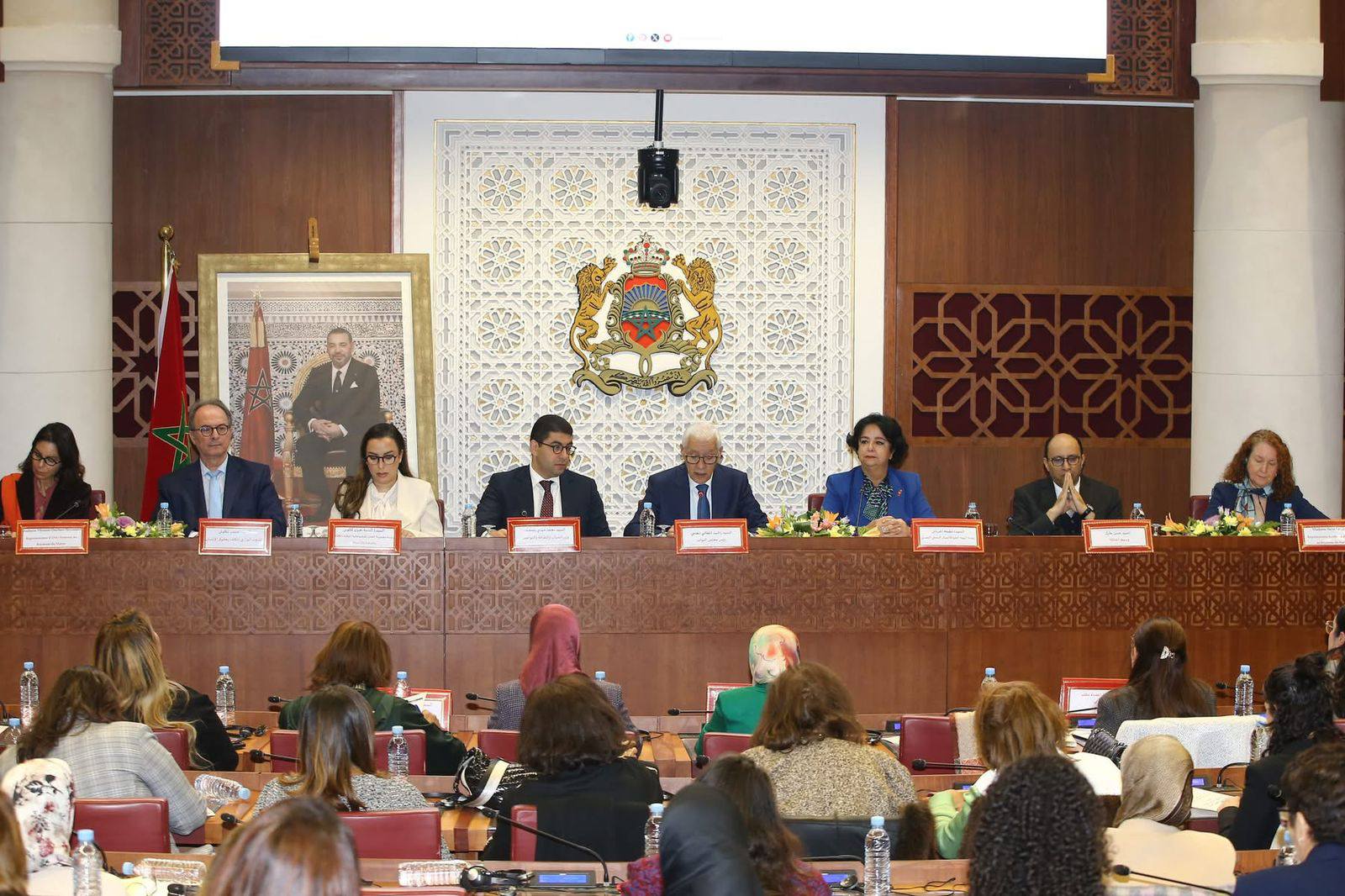
"كلمة السيد المندوب الوزاري المكلف بحقوق الإنسان بمناسبة أشغال المنتدى البرلماني السنوي الثاني للمساواة والمناصفة تحت شعار "التمكين السياسي للنساء رافعة أساسية لتحقيق التنمية"
السيد رئيس مجلس النواب؛ السيد وزير الشباب والثقافة والتواصل؛ رئيسة مجموعة العمل الموضوعاتية المؤقتة المكلفة بالمساواة والمناصفة؛ السيد وسيط المملكة؛ السيدة رئيسة الهيأة العليا للاتصال السمعي البصري؛ السيدة الممثلة المقيمة لبرنامج الأمم المتحدة الإنمائي بالمغرب؛ السيدة ممثلة هيئة الأمم المتحدة للمرأة بالمغرب؛ السيدات والسادة ممثلات وممثلو المنظمات النسائية الحزبية؛ السيدات والسادة ممثلات وممثلو المنظمات الحقوقية المدنية؛ السيدات والسادة الخبراء والباحثون؛ السيدات والسادة النائبات والنواب المحترمون؛ الحضور الكريم، كل باسمه وصفته؛ يسرّني ويشرّفني أن أشارككم أشغال هذا المنتدى البرلماني الثاني للمساواة والمناصفة، الذي ينظمه مجلس النواب، كمؤسسة دستورية تضطلع بدور محوري في ترسيخ قواعد الديمقراطية وتعزيز دولة الحق والقانون، وذلك تحت الرعاية السامية لجلالة الملك حفظه الله. كما أتوجه، في مستهل هذه الكلمة، بخالص عبارات التقدير والاعتزاز لمجلس النواب على اختياره موضوع «التمكين السياسي للنساء رافعة أساسية للتنمية» محورًا لهذا اللقاء، بما يعكس وعيًا برلمانيًا متقدمًا بمركزية قضايا المساواة والمناصفة في مشروعنا الديمقراطي والتنموي كما على المستوى الأممي. والشكر موصول إلى السيد رئيس مجلس النواب الأستاذ رشيد الطالبي على توجيه الدعوة لي لمشاركتكم هذه المناسبة. إن الحديث عن التمكين السياسي للنساء داخل هذا الفضاء الموقر ليس حديثًا عن فئة اجتماعية معينة، بل هو حديث عن جوهر الديمقراطية التمثيلية، وعن جودة القرار العمومي، وعن عدالة توزيع السلطة داخل المجتمع وانخراط كافة مكوناته في النمو والتقدم. فمستوى حضور النساء في مراكز صنع القرار يظل من أهم المؤشرات المعبرة عن نضج التجارب الديمقراطية ونجاعة الحكامة السياسية. لقد خطا المغرب خطوات وازنة في هذا المسار، بفضل الإرادة السياسية العليا لجلالة الملك محمد السادس حفظه الله، والإصلاحات الدستورية والتشريعية المتراكمة، التي رعاها جلالته سواء تعلق الأمر بإصلاح مدونة الأسرة أو بمكانة المرأة في الوثيقة الدستورية، حيث حرص جلالته على النهـوض بوضعيـة المـرأة، وفسـح آفـاق الارتقاء أمامهـا، وإعطائهـا المكانـة الـي تسـتحقها منذ اعتلاء جلالته عرش أجداده الميامين. وفي هذا السياق أكد جلالته في خطابه السامي بمناســبة ذكــرى عيــد العــرش المجيــد، بتاريــخ 30 يوليــوز .2022 "أن بنــاء مغــرب التقــدم والكرامــة، الــذي نريــده، لــن يتــم إلا بمشــاركة جميــع المغاربــة، رجالا ونســاء، في عمليــة التنميــة. لذا، نشدد مرة أخرى، على ضرورة المشاركة الكاملة للمرأة المغربية، في كل المجالات" . واعتبر جلالته في نفس المناسبة أن الأمر، "لا يتعلــق بمنــح المــرأة امتيــازات مجانيــة؛ وإنمــا بإعطائهــا حقوقهــا القانونيــة والشرعية. وفي مغــرب اليــوم، لا يمكــن أن تحــرم المــرأة مــن حقوقهــا" ... داعيا جلالته "لتفعيل المؤسسات الدستورية، المعنية بحقوق الأسرة والمرأة، وتحيين الآليات والتشريعات الوطنية، للنهوض بوضعيتها...." كما يعد دستور 2011 محطة أساسية في تكريس مبدأ المساواة بين الرجال والنساء، وفي النص الصريح على السعي نحو تحقيق المناصفة، مع إحداث هيئة مختصة بهذه المهمة. وقد ساهمت القوانين التنظيمية والانتخابية والتدابير التحفيزية في الرفع من تمثيلية النساء داخل البرلمان والجماعات الترابية، وهو مكسب مؤسساتي لا يمكن إنكاره في مسار البناء الديمقراطي الوطني. غير أن التمكين السياسي، من منظور ديمقراطي وتنموي، لا يُختزل فقط في الحضور العددي داخل المؤسسات المنتخبة، بل يتجاوز ذلك إلى مستوى المشاركة الفعلية في صياغة القرار العمومي، والتأثير في السياسات العمومية، والمساهمة في توجيه الخيارات الاستراتيجية للبلاد. فالرهان الحقيقي اليوم هو الانتقال إلى القيادة الفعلية، وإلى مواقع القرار وممارسة كاملة للاختصاصات والمسؤوليات. وفي هذا الإطار، تكتسي المساواة والمناصفة أهمية خاصة بوصفهما ركيزتين للحكامة الديمقراطية الجيدة. فالتنمية الشاملة تتحقق بإدماج كامل للنساء في تدبير الشأن العام، وبضمان تكافؤ حقيقي للفرص في الولوج إلى السلطة والمسؤولية. إن المناصفة ليست ترفًا تشريعيًا، ولا مطلبًا ظرفيًا، بل هي استحقاق دستوري وخيار استراتيجي لبناء مجتمع متوازن، أكثر عدلاً ونجاعة. ورغم ما تحقق من مكتسبات، لا تزال العديد من التحديات قائمة، سواء على مستوى تموقع النساء داخل الأحزاب السياسية والهيئات النقابية، أو على مستوى ولوجهنّ إلى مراكز القرار العليا، أو من حيث استمرار بعض التمثلات الثقافية التي تعيق تنامي نسبة القيادات النسائية. وفي هذا الإطار، يظل الانتقال من منطق الالتزام إلى منطق الأثر يقتضي التركيز على إجراءات عملية محددة، في مقدمتها تعزيز برامج التكوين السياسي والقيادي لفائدة النساء، داخل الأحزاب وفي إطار شراكات مؤسساتية مع الجامعات ومؤسسات الحكامة، بما يدعم تنامي بروز نخب نسائية مؤهلة لتحمل المسؤولية. كما يقتضي الأمر تقوية آليات المناصفة داخل الأحزاب والانتخابات، عبر تشجيع تحفيز الأحزاب السياسية على ترشيح النساء في الدوائر التنافسية لا في اللوائح فقط، وربط جزء من الدعم العمومي المخصص للأحزاب بمدى احترامها لمبدأ المناصفة الفعلية داخل هياكلها الترابية والوطنية، كما هو الشأن في التجارب الديمقراطية المتقدمة وعلى المستوى البرلماني، تبرز أهمية تعزيز تتبع إدماج مقاربة النوع في التشريع والسياسات العمومية، وتعميم التكوين في مجال الميزانية المستجيبة للنوع الاجتماعي. إلى جانب ذلك، يظل للإعلام دور محوري في إبراز النماذج النسائية القيادية ومحاربة الصور النمطية المعيقة للتمكين السياسي الكامل للنساء. إن الرهان في هذا المنتدى البرلماني هو تحويل التشخيص إلى خطط عمل، وهذا يتطلب تحديد رؤى عملية لتعزيز التمكين السياسي للنساء عبر ثلاثة محاور أساسية: التكوين والتأهيل، تقوية آليات المناصفة داخل الأحزاب وفي الانتخابات، وإدماج مقاربة النوع الاجتماعي بشكل أفقي في العمل التشريعي والرقابي للبرلمان وضمن السياسات القطاعية. ولا شك أن اقتراب موعد الانتخابات التشريعية المقبلة ببلادنا يشكل مدخلا جديدا للنهوض بالتمكين السياسي للنساء على مختلف هذه الواجهات، وجعل هذه المحطة مناسبة لتحقيق قفزة نوعية في مسار التجربة الديمقراطية ببلادنا. وهو ما يتطلب تظافر جهود الجميع لتحقيق هذا الهدف السيد الرئيس، السيدات والسادة، إن الرهان على التمكين السياسي للنساء هو رهان على ديمقراطية أكثر شمولاً، وعلى تنمية أكثر عدلاً، وعلى مجتمع أكثر تماسكًا. ومجلس النواب، بما يمثله من سلطة تشريعية ورقابية، يظل فاعلاً محورياً في تحويل مبادئ المساواة والمناصفة من مقتضيات دستورية إلى واقع تشريعي ومؤسساتي ملموس، ينعكس إيجابًا في السياسات العمومية وعلى حياة المواطنات والمواطنين. وتنبع مساهمة المندوبية الوزارية المكلفة بحقوق الإنسان في هذا المجال من صميم دورها كآلية وطنية مكلفة بالترافع الدولي أمام الهيئات الأممية، وتتبع تنفيذ التوصيات الصادرة عنها لفائدة بلادنا في مختلف المجالات، بما فيها التمكين السياسي للنساء. وسنعمل على ترجمة هذا الدور من خلال تعزيز قدرات مختلف الفاعلين المعنيين، حكوميين أو غير حكوميين، قصد إعداد وتنفيذ برامج وخطط عمل ناجعة للنهوض بهذا الورش. كما أننا بصدد بلورة استراتيجية شاملة جديدة للمندوبية الوزارية تأخذ بعين الاعتبار هذه الأبعاد، وتقوم على تصنيف التوصيات حسب القضايا والقطاعات، وإحداث قاعدة معطيات متكاملة لتتبع مدى الوفاء بالالتزامات ذات الصلة، ووضع مؤشرات لقياس مستويات التقدم المحرز. وفي هذا الإطار، نولي أهمية خاصة لتعزيز التعاون مع المؤسسة البرلمانية، من خلال تقاسم هذه الدينامية ودعم أدوارها الدستورية كمؤسسة معنية بالنهوض بحقوق الإنسان. وفي الختام، أجدد التأكيد على أن تحقيق المساواة والمناصفة ليس مسؤولية النساء وحدهن، بل هو ورش وطني جماعي، تتقاسمه المؤسسات الدستورية، والأحزاب السياسية، والمجتمع المدني، والإعلام، وكل الفاعلين في الحقل العمومي، من أجل مغرب أكثر إنصافًا، وأكثر ديمقراطية، وأكثر قدرة على مواجهة رهانات التنمية. شكرًا لحسن إصغائكم، والسلام عليكم ورحمة الله تعالى وبركاته.